
The Technology Trends Reshaping Modern Financial Services
Financial services are undergoing a fundamental transformation as technology changes how people save, borrow, invest, and manage their money. Traditional banking models, once built around physical branches and paper-based processes, are increasingly being replaced by digital platforms that prioritise speed, accessibility, and personalised experiences. Consumers now expect to open accounts, transfer funds, apply for loans, and monitor investments from their phones, often without speaking to a representative.
This shift is about more than convenience. Emerging technologies are changing how financial institutions assess risk, protect customer information, compete for market share, and develop new products. As digital innovation accelerates, understanding these developments has become essential for businesses, investors, and consumers seeking to navigate an increasingly connected financial landscape.
Artificial Intelligence Is Transforming Financial Decision-Making
Artificial intelligence has become one of the most influential technologies in modern financial services. Banks, lenders, and investment firms use AI-driven systems to analyse large volumes of information, identify patterns, and support decisions that would otherwise require considerable manual effort. These capabilities can improve fraud detection, streamline customer service, and help institutions assess lending applications more efficiently.
Machine learning models can identify unusual transaction patterns and flag potentially fraudulent activity before losses escalate. Meanwhile, conversational AI allows financial companies to provide round-the-clock assistance, answer routine questions, and guide customers through common account processes. However, financial institutions must balance automation with human oversight, particularly when decisions affect access to credit or other essential services. Transparent processes, reliable data, and appropriate safeguards remain critical to responsible adoption.
Digital Banking Is Redefining Customer Expectations
The growth of digital banking has challenged the assumption that financial services must be delivered through traditional branches. Mobile applications and online platforms allow customers to manage everyday finances wherever they are, reducing the time and administrative effort associated with routine transactions. Digital-first institutions have also introduced streamlined account opening, automated savings features, and integrated budgeting tools that make financial management more accessible.
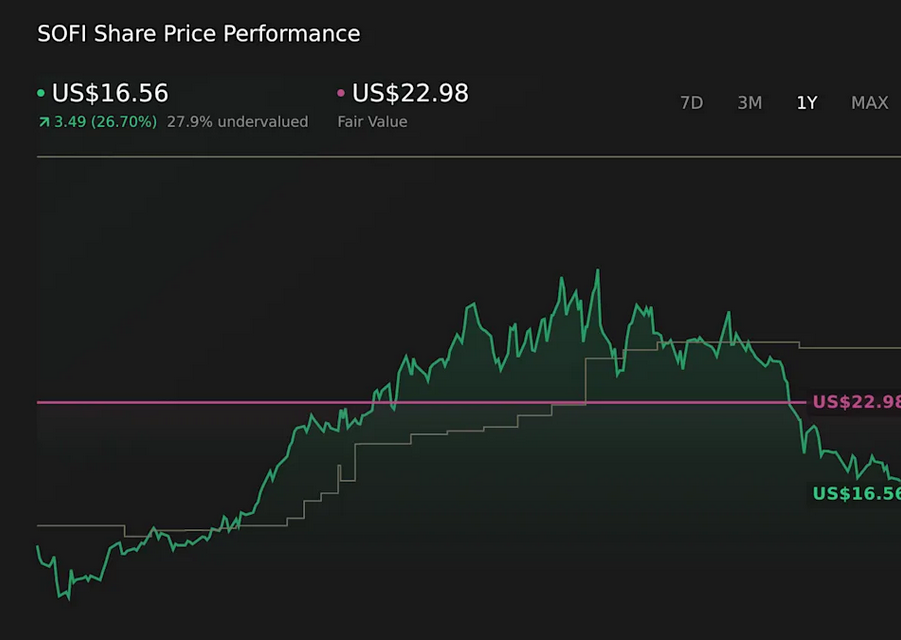
Companies such as SoFi illustrate how technology can bring multiple financial services together within a single digital ecosystem. Rather than treating banking, borrowing, and investing as entirely separate activities, integrated platforms can provide customers with a more connected view of their financial lives. For market observers, examining factors such as customer growth, product adoption, profitability, and the SoFi share price can offer insight into how investors evaluate the opportunities and risks facing digitally focused financial businesses. Share prices fluctuate, however, and should be considered alongside broader business fundamentals rather than as a standalone measure of long-term success.
Open Banking Is Encouraging Greater Competition
Open banking is another important development reshaping the financial sector. By allowing customers to authorise the secure sharing of financial information with approved third-party providers, open banking frameworks can make it easier to compare products, access tailored services, and manage accounts across multiple institutions. This approach challenges the traditional model in which customer data remains largely confined within a single financial provider.
For consumers, the benefits may include more accurate budgeting tools, faster financial assessments, and easier access to suitable lending options. Businesses can also use authorised financial data to improve cash-flow forecasting and streamline payment processes. Nevertheless, the effectiveness of open banking depends on strong security standards, clear consent procedures, and responsible data handling. Financial institutions and technology providers must ensure that greater connectivity does not come at the expense of customer privacy or trust.
Blockchain Is Expanding Financial Infrastructure
Blockchain technology has attracted attention for its potential to improve the way financial transactions and records are maintained. Distributed ledgers can provide a shared record of transactions, potentially reducing reconciliation work and improving transparency between participating organisations. In certain applications, smart contracts can automate predefined actions when specified conditions are met.
These capabilities may be useful in cross-border payments, digital asset settlement, and the management of financial agreements. Tokenisation, which represents assets digitally on a blockchain, is also being explored as a way to modernise ownership records and settlement processes. However, blockchain adoption faces practical challenges, including regulatory uncertainty, interoperability limitations, cybersecurity risks, and questions about scalability. Its long-term value will depend on whether specific applications deliver measurable improvements over established systems.
Cybersecurity Is Becoming a Strategic Priority
As financial services become increasingly digital, cybersecurity has moved from a technical concern to a central business priority. Financial institutions hold sensitive personal information and facilitate transactions that criminals continually attempt to exploit. Phishing, identity theft, ransomware, and sophisticated account takeover schemes can undermine customer confidence while creating high operational and financial costs.
Modern security strategies increasingly combine encryption, multifactor authentication, behavioural monitoring, and automated threat detection. Institutions are also investing in employee training and incident response planning because technology alone cannot eliminate every vulnerability. Regulators and industry organisations continue to emphasise risk management, resilience, and the protection of sensitive information.
Conclusion
Technology is reshaping financial services through artificial intelligence, digital banking, open banking, blockchain, stronger cybersecurity, and embedded finance. Together, these developments are creating a more connected and responsive financial ecosystem, while introducing new responsibilities around privacy, transparency, and risk management.
For consumers, the most important step is to understand how new tools work and evaluate whether they genuinely improve financial decisions. For businesses and investors, sustainable success will depend on more than adopting the latest technology. Institutions must combine innovation with sound governance, reliable security, and clear customer benefits.